
Product Categories
 Multi-axis load cell
- Rod end load cell
- Cylindrical load cell
- Pancake load cell
- S type load cell
- Button type load cell
- Single point load cell
- Digital load cell
- Shear beam load cell
- Planar beam load cell
- Tension link load cell
- Tension sensor
- Through hole load cell
- Weighing module
- Special load cell
- Rotary torque sensor
- Reaction torque sensor
- Amplifier and instruments
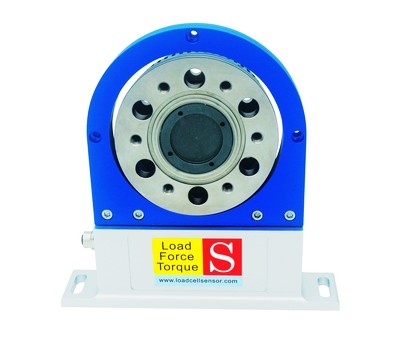


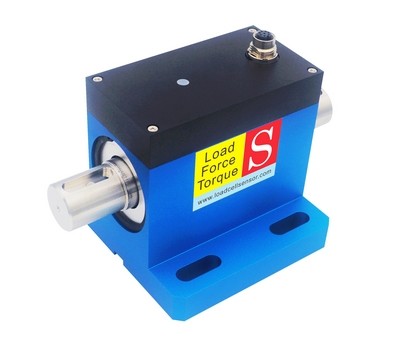
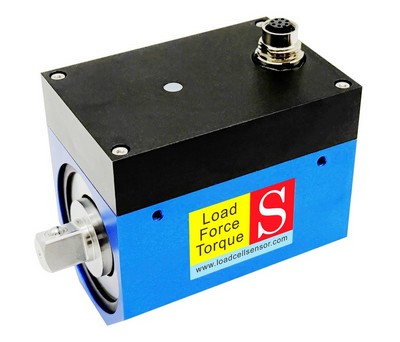
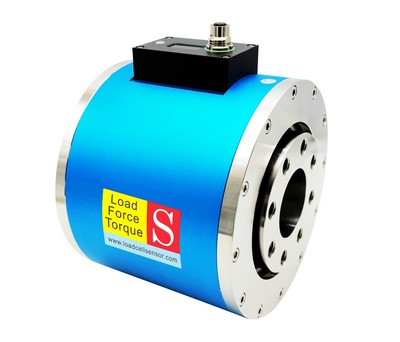

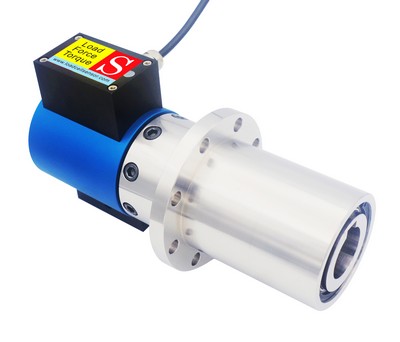
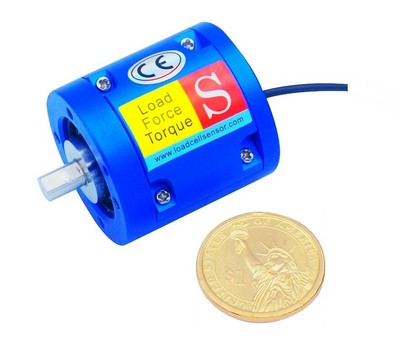


What is a rotary torque sensor?
Rotary torque sensors are designed to measure torque transmitted through rotating shafts, flanges, and drive systems while converting torsional deformation into an electrical signal. Unlike reaction torque devices, the sensing element rotates together with the mechanical drive while the housing and cable remain stationary. This configuration enables continuous torque measurement in rotating machinery such as motors, engines, gearboxes, transmissions, pumps, turbines, crankshafts, and other powertrain components.
A dynamic torque transducer is commonly used on test benches and production equipment where torque changes continuously during operation. Typical applications include motor and engine testing, gearbox efficiency analysis, valve opening and closing torque measurement, rotating tool testing, fastener quality control, stirring and mixing systems, and torque feedback for automated machinery. Depending on the measurement system, speed can also be monitored together with torque to evaluate rotational performance.
LCS provides both slip-ring and non-contact signal transmission technologies. Slip-ring designs use strain gauges arranged in a Wheatstone bridge on a precision-machined elastic element, with the measured signal transferred through rotating contacts and brushes. A contactless torque sensor uses magnetic coupling to transmit the measurement signal without physical electrical contacts, reducing mechanical wear and making it suitable for applications requiring long operating life and higher rotational speeds.
A rotary torque transducer can provide either an unamplified mV/V output or an amplified standard signal depending on the configuration. Slip-ring models are available for direct torque measurement, while non-contact versions can be configured for torque and rotational speed measurement with outputs such as 0–5 V, 0–10 V, or 4–20 mA. These options allow straightforward integration with indicators, controllers, PLCs, and data acquisition systems.
LCS offers rotating torque measurement solutions with rated capacities from 0.1 Nm to 5 kNm and rotational speeds up to 12,000 RPM. Custom designs are available for specific shaft dimensions, mounting interfaces, speed requirements, output signals, and application conditions, supporting OEM equipment and specialized dynamic torque testing systems.